I wanted to be a dress maker, not a code maker.
The origins of Encrypting Democracy go back more than 40 years.
It was 1980 and Neal O’Farrell’s first year at the College of Marketing in Dublin Ireland where he hoped to develop the skills to prepare him to be the third generation to take over a famous Irish weaving business.
That changed very quickly when a fellow student showed him how using a little bit of software code on something called a floppy disk could capture all the passwords entered on any targeted computer.
Neal was hooked. Just a few years later, in the mid 1980s, he had carved out a modest career as one of Ireland’s first computer security consultants.
After a highly publicized phone tapping scandal he developed a telephone scrambler to replace the Irish government’s aging telephone security system. Shortly after that, and still only in his 20s, he won the first contract to encrypt Ireland’s national ATM network.
That led to an approach from Irish military intelligence and a challenge. To take advantage of Ireland’s growing expertise in encryption, combined with the country’s neutral status, and take on one of the biggest global challenges in secure communications.
The army, and many others apparently, wanted someone to develop a European rival for the STU3, Secure Telephone Number 3, only recently launched by the NSA and widely viewed as the most secure secure telephone system in the world. Often costing more than $7,000 per phone, it was also suspected of coming with a back door.
The Irish Department of Defense was only interested in a telephone system that was truly secure and unbreakable. And that could also encrypt data and even fax communications to the highest level.
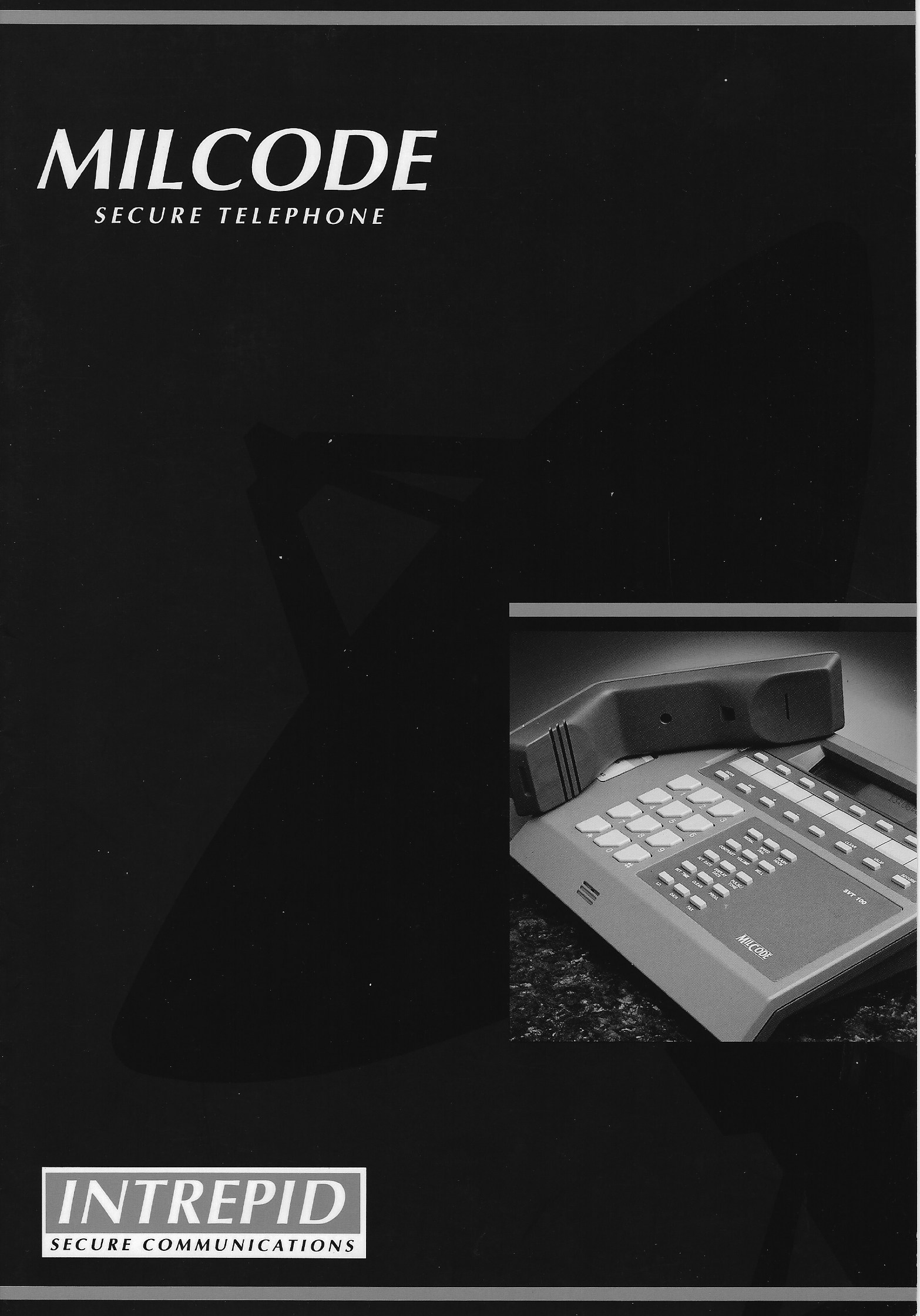
Neal assembled a team of more than a dozen academics and technologists, raised half a million pounds in funding, and with 18 months the startup demonstrated the first prototype of the world’s most secure telephone.
The project was called intrepid, and the phone was named Milcode.
Within months of the launch of the prototype serious negotiations began with some of the world’s biggest military communications companies. And just as quickly, the excitement and conversations dried up, funding dried up, and the project quickly folded.
It was revealed later, at a series of meetings in London and at GCHQ, that the fledgling start-up was yet another victim of the crypto wars, killed by the threat from the US government that any organization dealing with or purchasing phones from Intrepid would be blacklisted from future US contracts.
The Crypto Wars came to an end just a few years later when in 1996 President Bill Clinton signed an executive order that ended the classification of encryption as a munition or weapon.