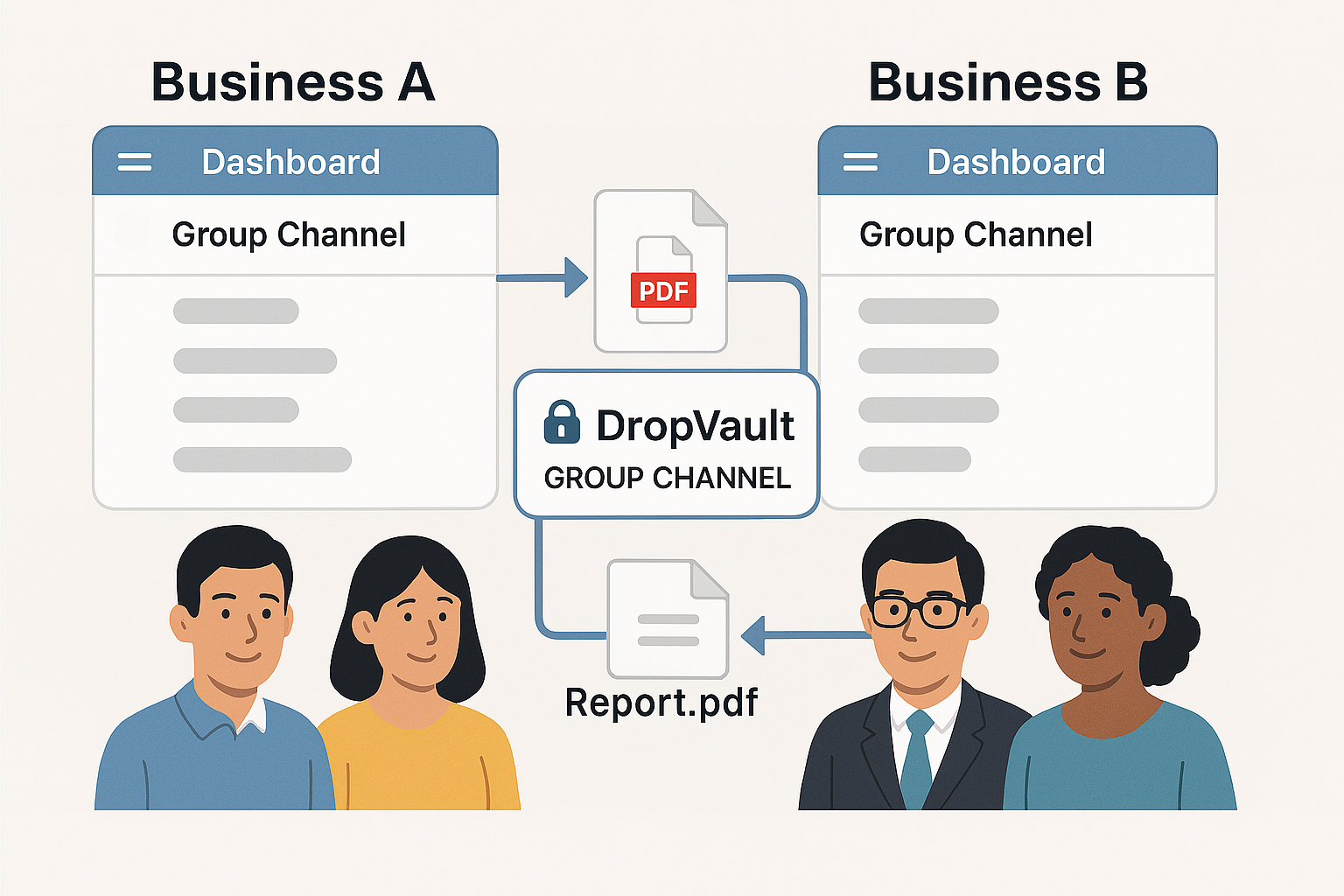
Your Vendor & Client Are Critical. Your Ticketing System Isn't
Your vendor & client relationship is too important to run through support@, ticket numbers and endless “just checking in” emails.
A critical issue gets raised in one place. The discussion happens somewhere else. Documents are attached to an email thread. Someone updates a ticket. Someone else keeps a spreadsheet. And when the issue is finally resolved, nobody has a complete record of what happened.
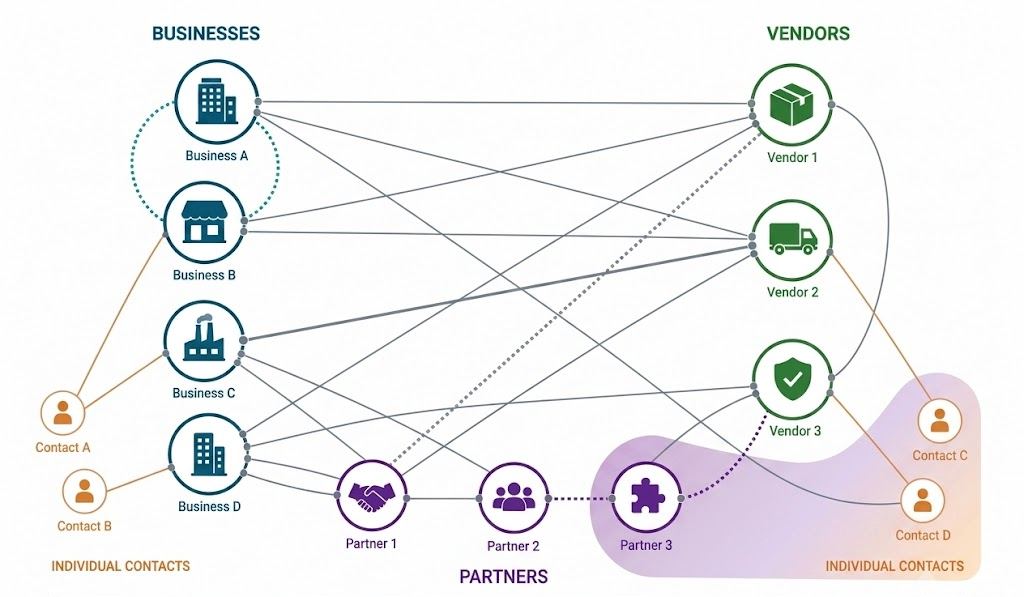
DropVault brings the entire support relationship into one secure, peer-to-peer workspace.
Raise the issue. Bring the right people in. Share the information. Assign the work. Track progress. Approve the resolution.
Everything happens in one place – visible to both sides, encrypted from the start, and recorded from beginning to end.

Your Vendor & Client Relationship Deserves More Than a Ticket Number
Most vendor support systems are designed around the vendor’s workflow.
You send an email. It becomes a ticket. The vendor works on it inside their system. You wait for an update.
The conversation is separate. The supporting documents are somewhere else. Internal discussions happen in another thread. And when someone asks, “What actually happened here?”, the answer is scattered across systems, inboxes and people.
That’s not collaboration. It’s two businesses trying to work together through a system neither one fully controls.
A DropVault Channel changes the model.
Create a direct, peer-to-peer connection between your business and your vendor or client – Or the vendor can create and share with you.
Both teams work in the same encrypted environment. Both see the same conversation. Both see the same tasks. Both have the same context. Both sides can contribute to the discussion.
One channel. One shared history. One source of truth.
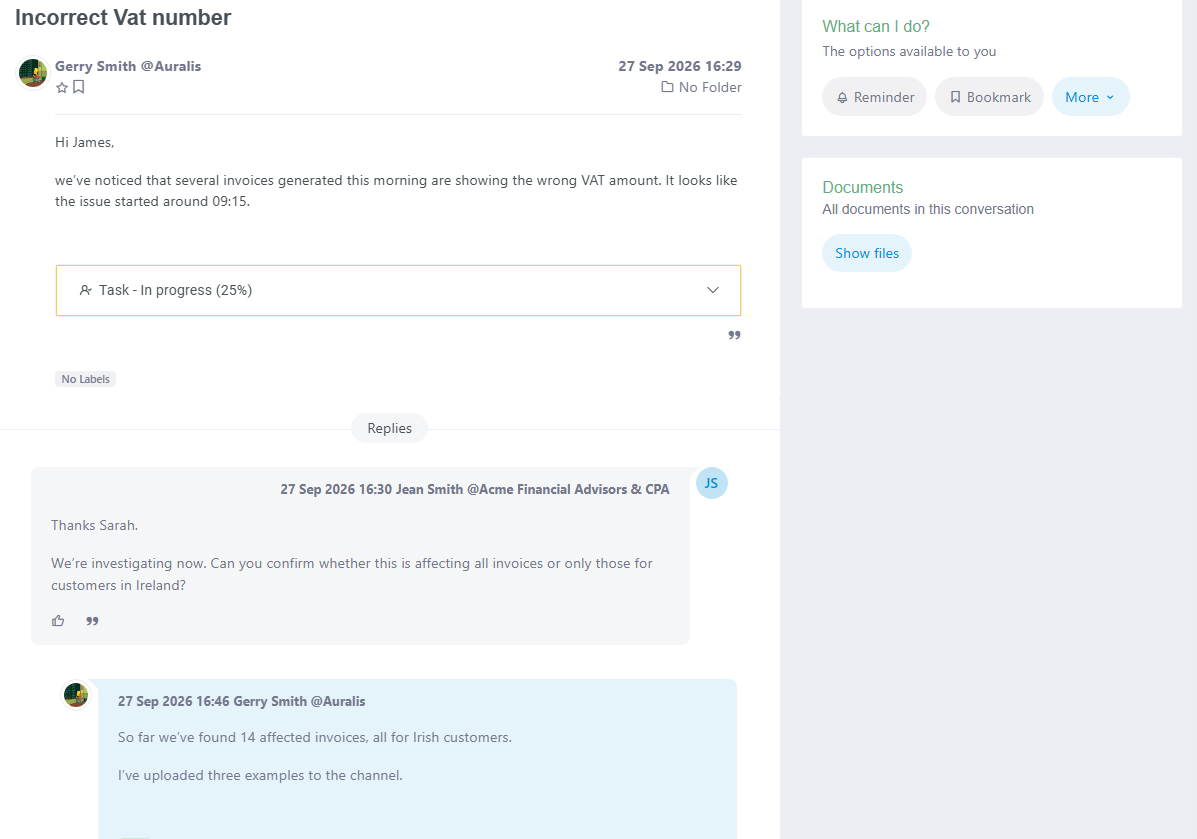
Raise It. Discuss It. Assign It. Resolve It.
An issue shouldn’t have to become a ticket before people can start working on it. Raise it directly in the shared channel.
Discuss it with the people who need to be involved. When it needs formal tracking, turn the conversation into a task – without re-entering the details or losing the context.
Assign an owner. Set a priority. Add a due date. Set reminders.
The task stays attached to the conversation that created it.
No ticket translation. No separate task tracker. No “what was this about again?” emails.
Both Sides Have a Seat at the Table
Vendor & Customer management shouldn’t mean handing control of the process to someone else’s ticketing system. The vendor can assign the work to the right person. Your team can see exactly what is happening.
Everyone works from the same information, with the same visibility, in the same channel. And when something needs attention, the reminder sits beside the task – not buried in someone’s inbox. No chasing. No status-update calls. No wondering who owns the next step.

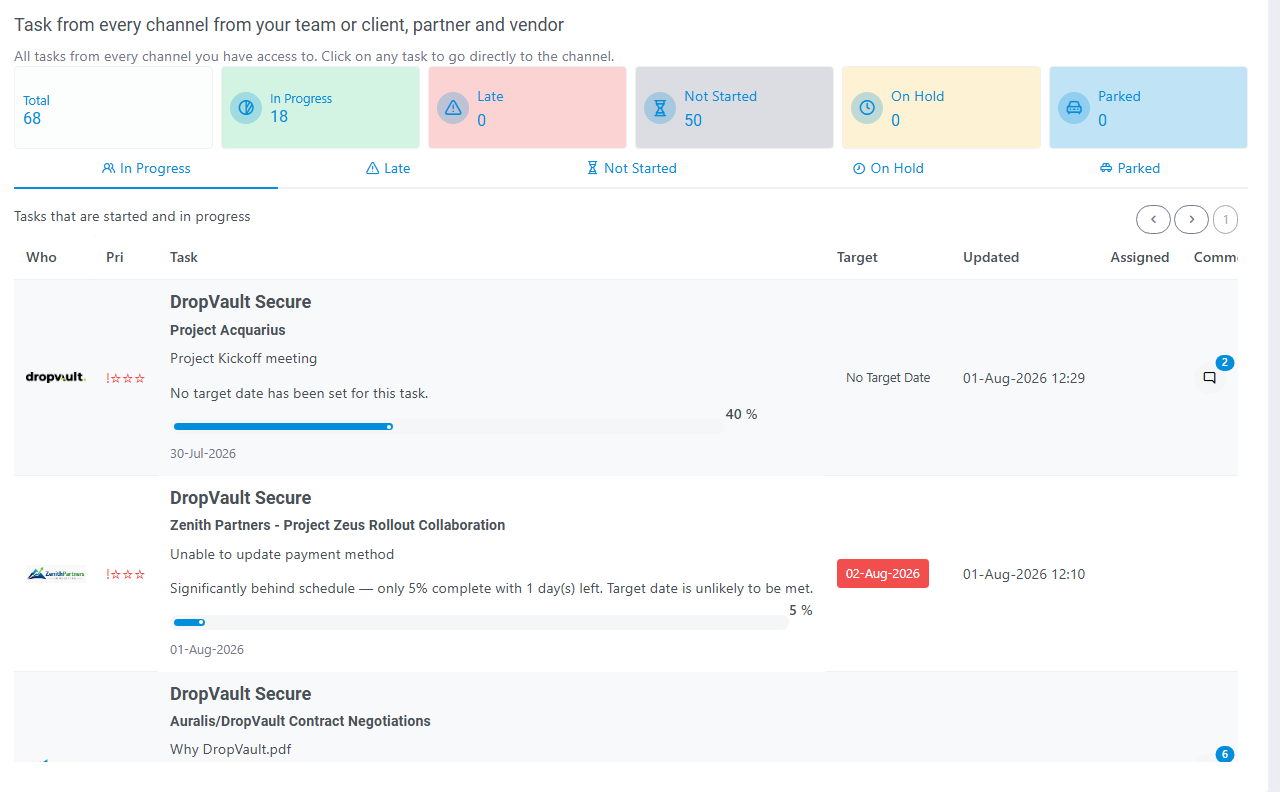
Every Open Issue. One Dashboard. No Chasing.
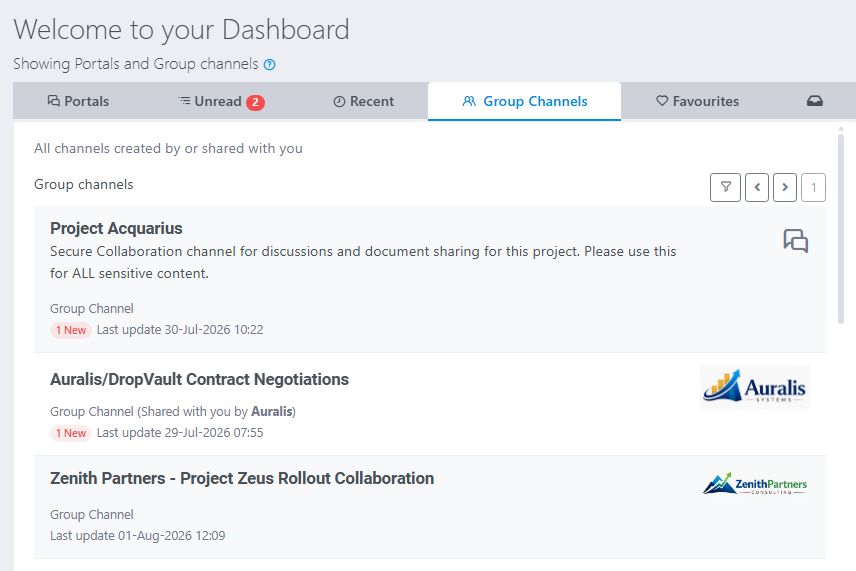
Once your relationships involve more than a handful of open issues, email stops being a reliable way to manage them. The DropVault task dashboard gives both sides a live view of what’s happening:
Click into any item and see who owns it, what needs to happen next, and when it is due. There is no weekly status report to prepare and no spreadsheet to maintain.
The status is already there.
Resolution time is calculated automatically from the moment the task is created until it is signed off and closed. You get an objective record of how long issues actually take to resolve – without asking anyone to maintain a timesheet or manually report the number.
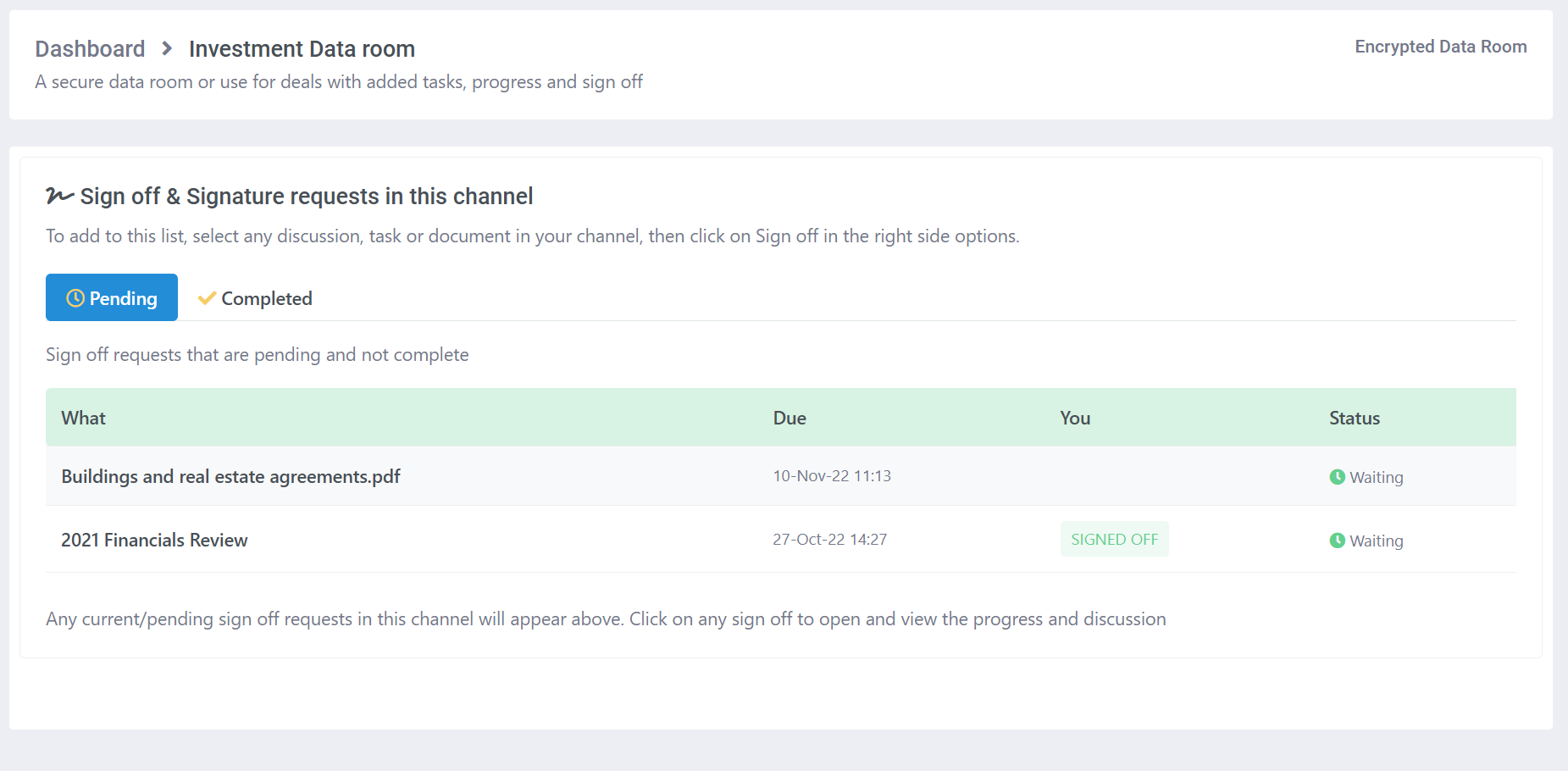
Don’t Just Mark It “Resolved”. Get Sign-Off.
“Resolved” in a vendor’s ticketing system doesn’t necessarily mean your business agrees that the issue is resolved. With DropVault, the vendor can request formal sign-off when the work is complete. Your team confirms the resolution.
The sign-off is timestamped, tied to a verified identity, and permanently recorded in the channel. So there is no ambiguity later about: What was agreed. Who agreed to it. When it was agreed. The complete history remains with the relationship – from the original issue to final resolution.

Sensitive Information Shouldn’t Live Forever in a Ticket
Support tasks regularly involve information that should never travel over email – temporary passwords, API keys, access credentials, configuration files. In a standard workflow this data sits in a ticket or email thread indefinitely, in plaintext, accessible to anyone who has access to the thread long after the issue is resolved.
In a DropVault support channel, sensitive data shared as part of a task is encrypted from the moment it enters the channel. When it has served its purpose, auto-deletion removes it from both sides simultaneously – no manual cleanup, no forgotten credentials sitting in an old thread, nothing left exposed after the task is closed.
Both teams. One workspace. No email required.
Give your vendors and partners a permanent seat at the table. By joining DropVault, they bypass the inbox entirely. Shared channels sync directly to their own dashboard — no links to send, no email notifications, no guest accounts to manage.
Both sides access the same channel from their own environment, with their own team and their own access controls. It scales as the relationship does.