“The world’s most insecure data room is called Inbox!”

A secure, conversational deal channel that stays open for the relationship the transaction creates.
Virtual data rooms were built for a single purpose: controlled document disclosure during a transaction. They do that job. But the moment the deal closes, the room is archived, access is revoked, and everyone goes back to email. The relationship the transaction created has no infrastructure.
A DropVault channel is a data room that stays open.
Each channel is a direct, encrypted, peer-to-peer connection between two organisations — scoped to a single audience, requiring no permission matrix, and accessible from both sides’ dashboards from day one. Documents, discussions, tasks, sign-offs, and signatures all happen in the same place. The deal closes. The channel doesn’t.
A DropVault deal channel covers every stage of the transaction lifecycle – and every dimension of the relationship it creates.
Where a traditional data room handles document disclosure and nothing else, a DropVault channel is conversational, collaborative, and continuous. Documents and discussions live together. Tasks track what needs to happen. Sign-offs close each stage formally. And because the channel stays open after execution, it becomes the permanent home for the relationship the deal created – with the complete history of how it began already inside it.
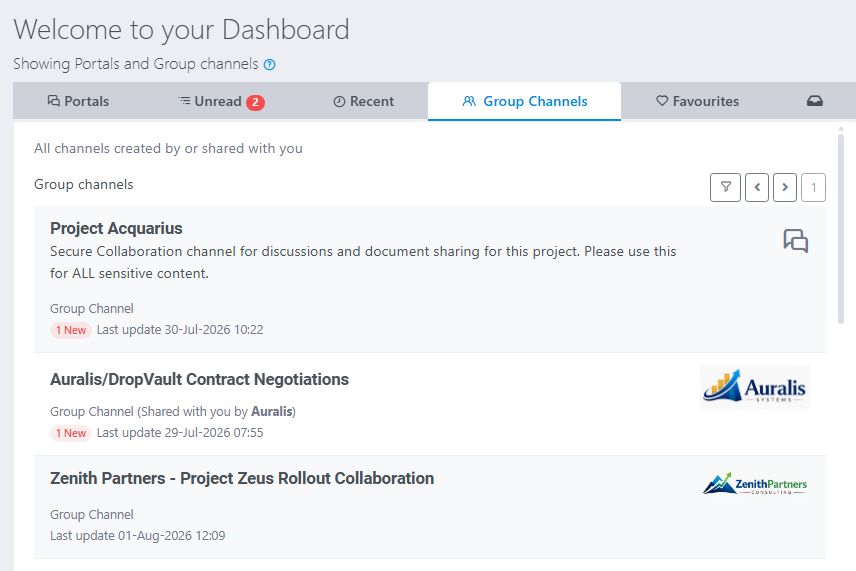
One channel per counterparty. No permission matrix to manage.
Traditional data rooms manage access through a permission matrix – folders and documents with individual access lists, maintained by an administrator, updated as relationships evolve and parties progress through the process. It works. It also requires constant administration and creates a real risk of misconfiguration – the wrong person seeing the wrong document, or the right person losing access at the wrong moment.
A DropVault channel is scoped to a single audience from the outset. Everyone in the channel sees everything in the channel – which means there is no permission matrix to build, maintain, or get wrong.
Conversational, Not just documentary.
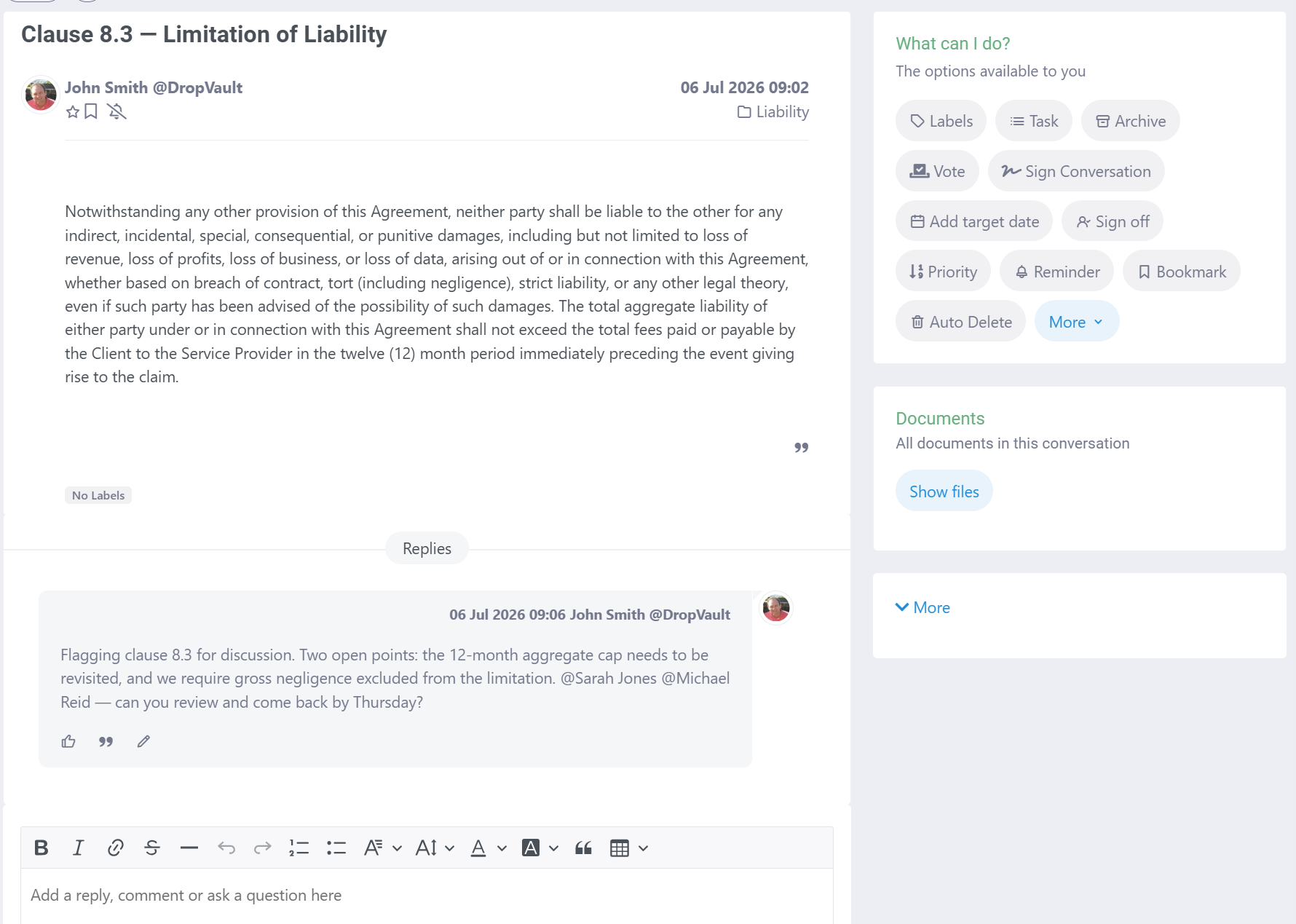
Most data rooms are document repositories. Documents go in, participants view them, and Q&A happens in a separate process nobody can fully reconcile with the documents it refers to. The discussion is in an email thread. The question is in a Q&A log. The decision is in someone’s notes from a call.
A DropVault channel keeps documents and the conversations about them in the same place. Questions are raised in context, alongside the document they refer to. Decisions are recorded where they are made. The complete history of the transaction is in one place, permanent and retrievable, from the first NDA to the final signature.
Better encryption than most data rooms.
Most virtual data rooms encrypt data using keys managed by the platform or its cloud vendor – which means a breach of their infrastructure is, in most cases, a breach of the documents inside it. The keys and the data they protect live close enough together that compromising one tends to mean compromising the other.
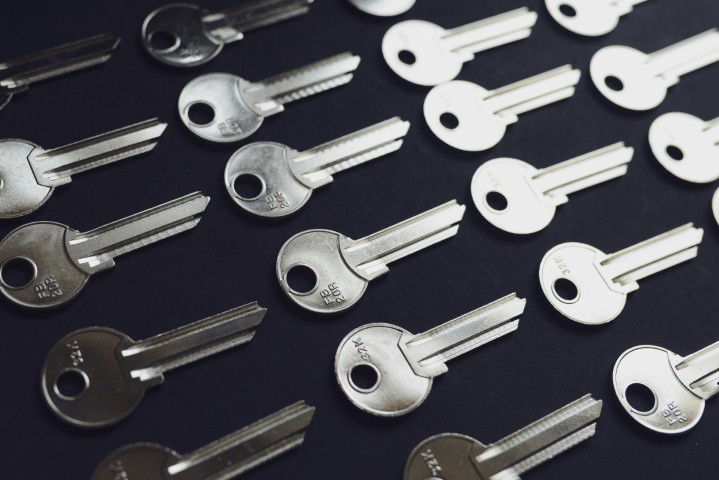
A DropVault channel uses application-level encryption where each channel holds its own unique key stored in a hardware security module, entirely separate from the data it protects. An attacker who reaches the data layer finds ciphertext. For a transaction involving financial disclosures, IP filings, and commercially sensitive documentation, that distinction matters considerably.
Tasks and a complete audit trail.
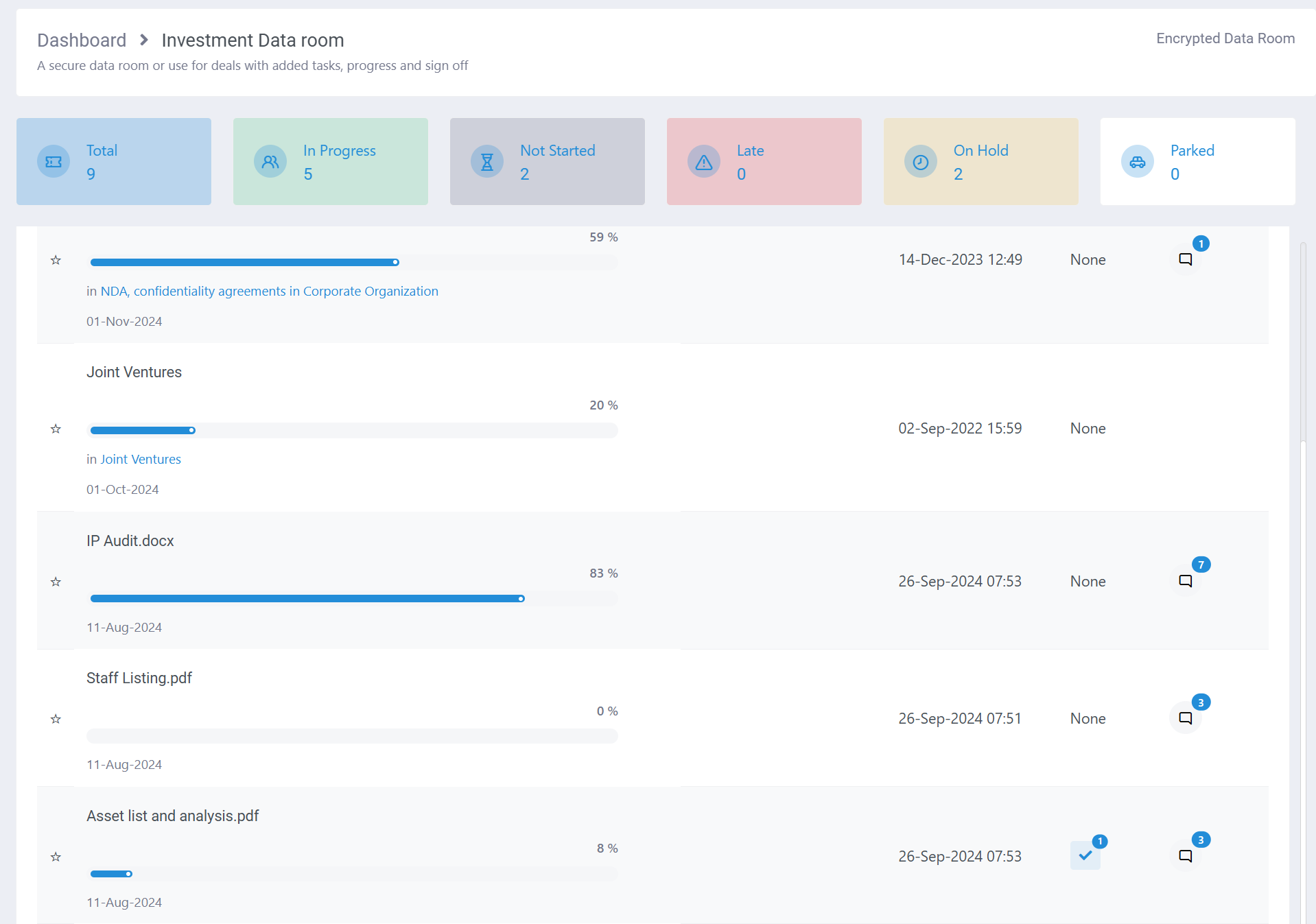
A transaction generates actions as well as documents. Review this by Friday. Get sign-off on the exclusivity terms. Confirm the regulatory position. In a standard data room, these actions live in a separate email thread or a spreadsheet nobody maintains consistently.
In a DropVault channel, tasks are created directly from discussions, assigned to specific people on either side, given due dates and reminders, and tracked to completion. Sign-offs are timestamped, tied to authenticated identities, and locked once given. When the deal closes, the complete audit trail is already there.
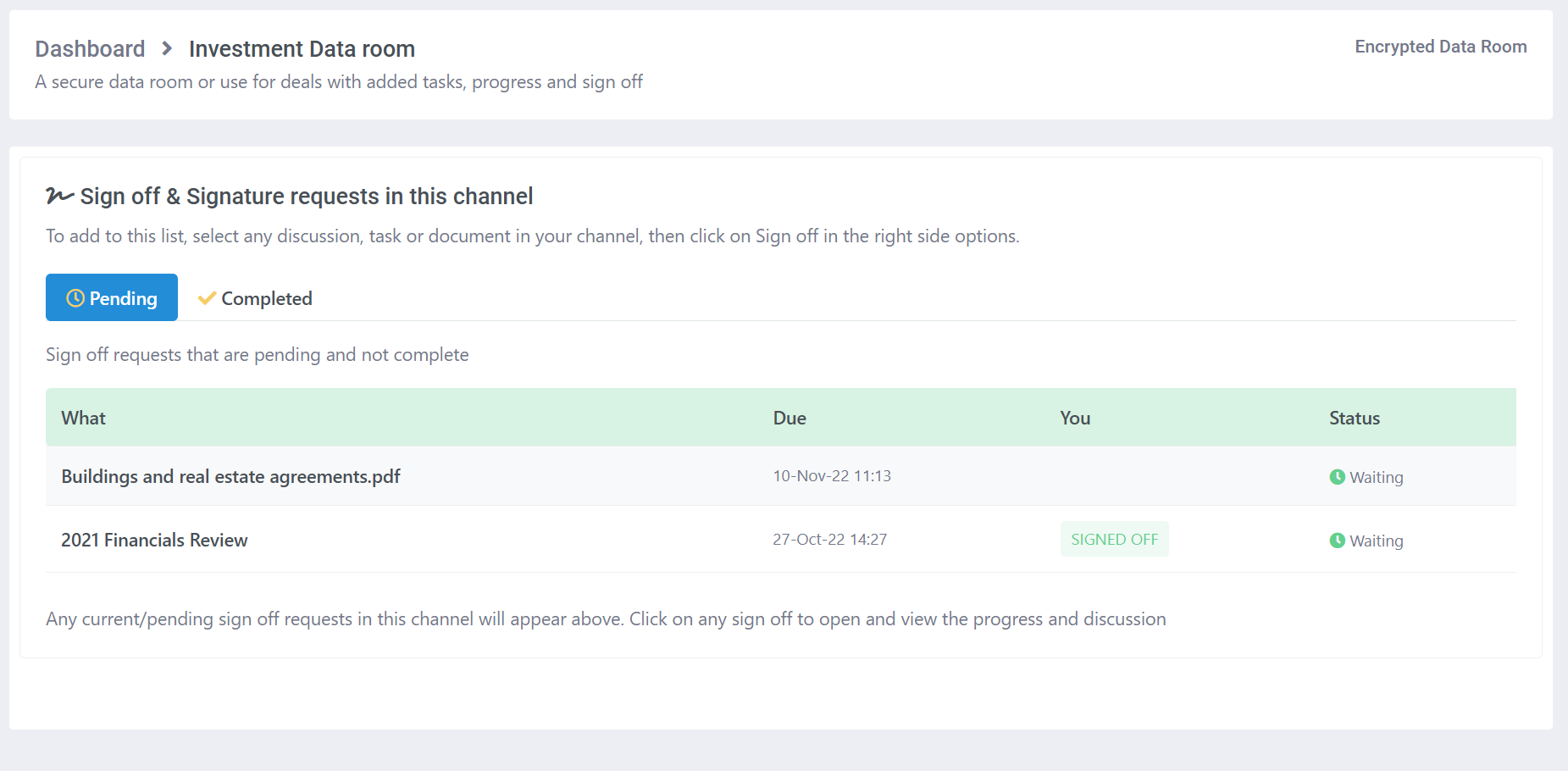
Controlled Review with Formal Sign-Off
Ensure critical information is reviewed by the right people before decisions are made. Assign documents or discussions to a team, monitor review status, capture feedback, and collect evidence throughout the process. When the team reaches a conclusion, trigger a formal approval workflow and record the final sign-off for governance, compliance, and audit purposes.
The sign-off is timestamped, tied to a verified identity, and permanently recorded in the channel. So there is no ambiguity later about: What was agreed. Who agreed to it. When it was agreed.
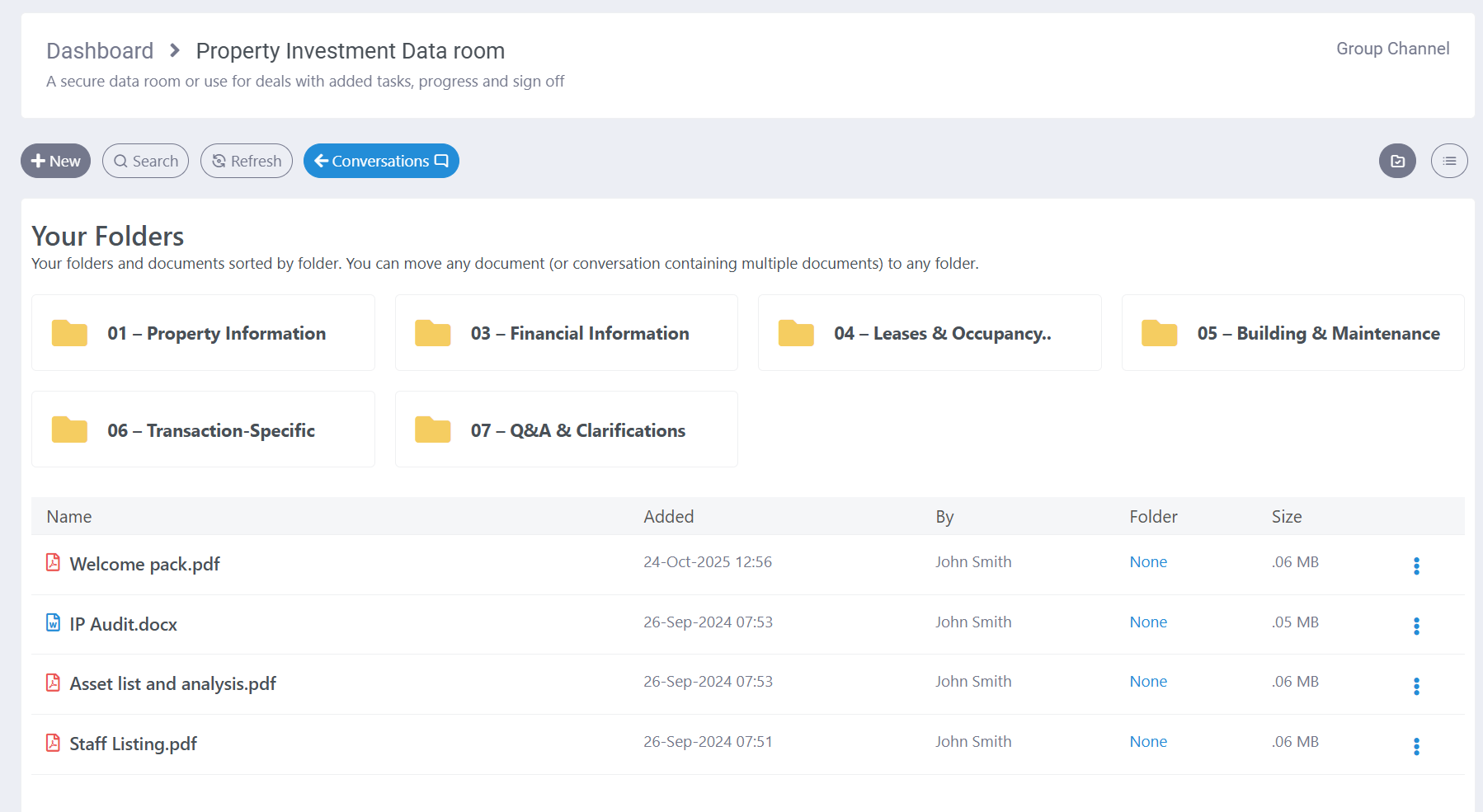
Keep Every Deal Organized and Deal-Ready
Create a structured data room where documents are organized into folders that mirror the stages, workstreams, and requirements of your deal. Whether managing due diligence, vendor assessments, M&A activity, fundraising, or procurement processes, teams can quickly navigate to the information they need without relying on complex email trails or shared drives.
Documents can be uploaded directly into folders or added as part of discussions, allowing supporting conversations, requests, and decisions to remain connected to the underlying evidence. This ensures reviewers always have the full context behind a document, question, or action item.
IP, financials, and sensitive disclosures. protected by architecture.
Transactions involve the most commercially sensitive information a business holds – pricing, intellectual property, financial projections, technical architecture, competitive intelligence. Its exposure to the wrong person can have material consequences.
A DropVault channel protects sensitive transaction materials by architecture rather than policy. Documents are encrypted at the application level before storage. The platform cannot read them. AI tools cannot access them. A breach produces ciphertext. Watermarking ties every document to the identity of whoever accessed it – a deterrent against unauthorised sharing and a clear record if it occurs.
From deal room to relationship infrastructure.
The transaction is a moment. The relationship it creates is what follows. Investors become ongoing stakeholders. The acquirer becomes the integration partner. The counterparty becomes the long-term business relationship.
A DropVault channel transitions naturally from deal room to relationship infrastructure. The channel that hosted the transaction becomes the channel for post-deal communications – investor updates, integration planning, ongoing contract management – without rebuilding the environment or migrating the history. The relationship continues in the same encrypted, peer-to-peer environment where it began.