Ireland's most feared startup and the dressmaker who took on the NSA
Neal O’Farrell was supposed to be a dressmaker, not a codemaker. Yet a chance encounter with Ireland’s military intelligence led him down an encryption path that would put him into direct conflict with the NSA as he threatened to silence the world’s most secretive global surveillance network.
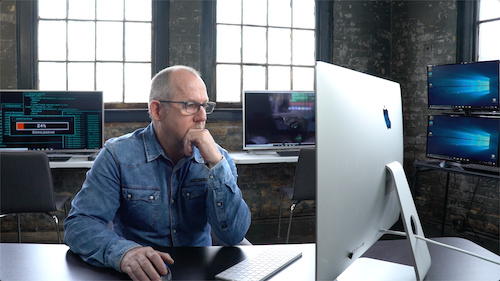
Neal holds the slightly dubious distinction of being one of the first cybersecurity experts to be targeted and blacklisted by the US government because of his early work in encryption, and a year before the noted scientist and cryptographer Phil Zimmerman was very publicly targeted for the same reason.
It all began in 1989 when the Irish Department of Defence signals directorate, or military intelligence, invited Neal to consider taking advantage of Ireland’s neutral status and encryption expertise to try to build the world’s most secure encrypted telephone. A telephone that could not be eavesdropped on by anyone, including the NSA. The telephone was called Milcode and it briefly held the crown as the world’s most advanced secure telephone before being targeted by the NSA.
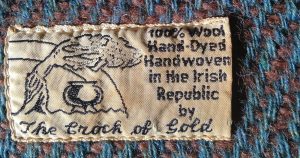 But it was never supposed to be like that. Neal’s plan was to be the third generation to take over the Crock of Gold, a well known Irish weaving business founded in 1919 and based on a small country estate in Blackrock.
Customers of the Crock read like a who’s who of the rich and famous. Coco Chanel, Yves Saint Laurent, Pierre Balmain, Guy Laroche, the Duchess of Westminster, the Queen Consort of Siam, and Nancy Reagan.
But a basement in Parnell Square changed that plan. In 1980, in his first year at the College of Marketing and Design in Parnell Square, a fellow student gave Neal a demonstration of how by simply inserting a floppy disk with a little bit of code he could steal a lecturer’s password and get access to all the questions for an upcoming test.
Two years later, when he dropped out of college, he was approached by a software startup looking for ways to protect their expensive new accounting software from being pirated. The solution he found was a plug in “dongle” that used a type of encryption known as the Data Encryption Standard, or DES, and that’s where Neal’s obsession with encryption began.
A Bugger’s Life
In the mid 1980’s the computer security industry in Ireland was still young and small, and Neal survived by selling and installing closed circuit surveillance systems. A conversation about surveillance with CIE changed that and led to a bugger’s life.
Neal had developed a covert video surveillance system based on a matchbox-sized camera designed by French defense firm Thomson CSF and previously used for bomb disposal robots. CIE wanted to install one of the cameras at Dundalk railway station to try to catch bombers wheeling Semtex-laden bicycles onto cross-border trains.
That led to yet more opportunities to sell and install covert surveillance devices, and eventually and ironically an even bigger business sweeping businesses and homes for the same surveillance devices. With referrals mainly from the Garda Technical Bureau in Phoenix Park, customers included JE Davy Stockbrokers, Aer Lingus, Waterford crystal, a number of food companies, and more than a dozen politicians and business owners.
Phone Tapping Scandals
 Cellular telephones were becoming more common in Ireland – and almost as common were the scandals resulting from eavesdropping on and recording some of those conversations.
After two Fianna Fail TDs were recorded on a phone call disparaging a colleague, an outcry and investigation found that the few times Irish government ministers actually used secure phones for confidential discussions, they were on an aging and highly vulnerable frequency inverter voice scrambler called Privacy Set #8.
The Privacy Sets had been developed in the 1960s by GEC Marconi specifically for landlines and could easily be eavesdropped on by the mid 1980’s.
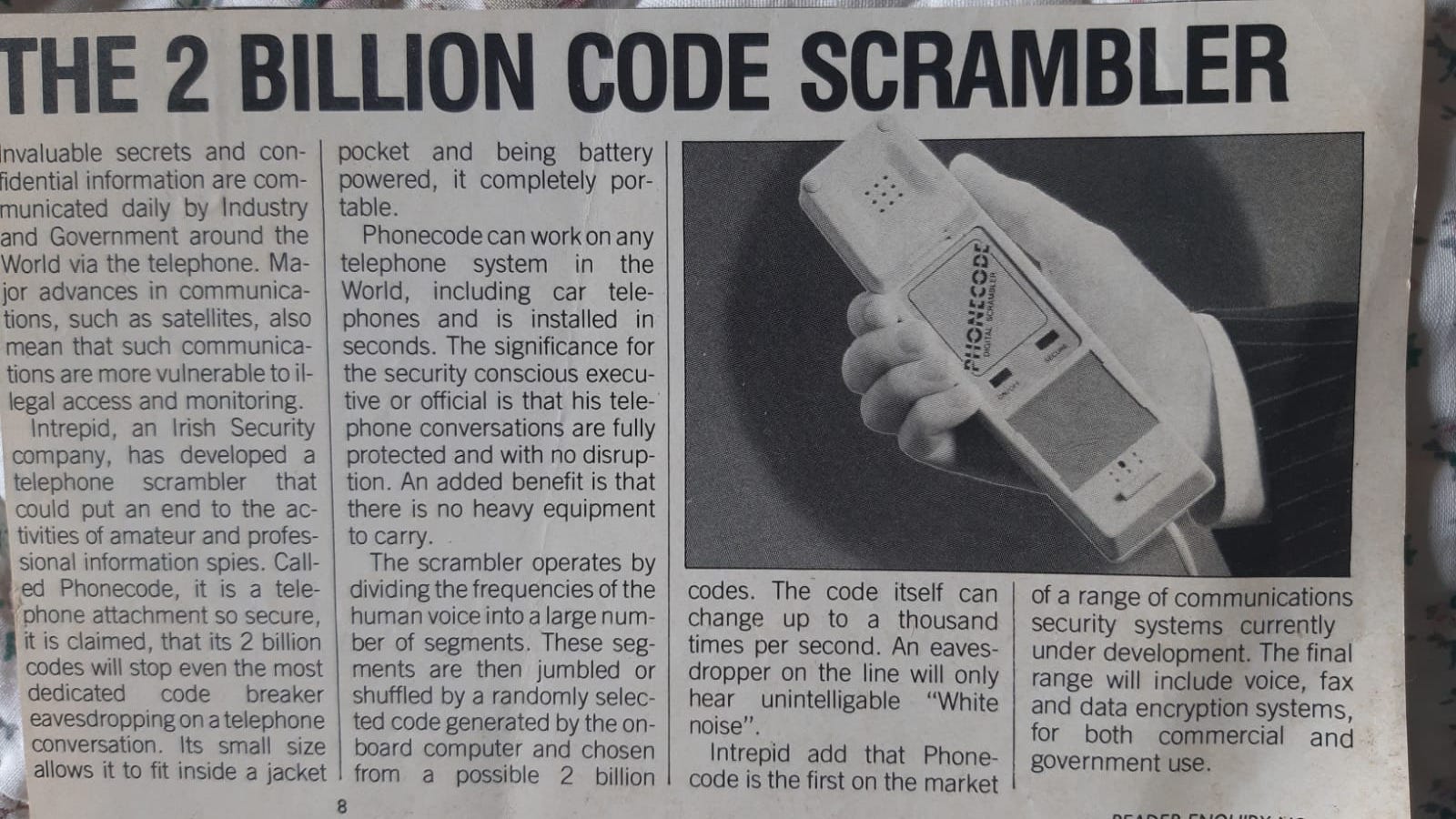
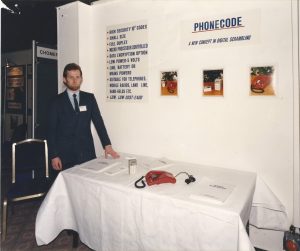
In response, Neal and a colleague from Telecom Eireann saw an opportunity to develop a much more advanced type of frequency inverter they named PhoneCode, and at an exhibition in London to launch the phone, Neal struck up a conversation with what turned out to be Irish military intelligence and the first step towards the development of Milcode.
A Computer Security Career
Neal’s first real foray into computer security began in 1987 as a reseller for risk assessment and recovery planning software. His first customer was Bank of Ireland who hoped his software could help them plan for a potential major disaster.
Because of continuing terror threats, the bank was considering building a replica of its National Computer Centre in Cabinteely in a hardened bunker directly below the existing computer center. It was hoped that Neal’s software would help them plan for a variety of scenarios and outcomes.
On the recommendation of the Bank of Ireland, the following year Neal was awarded a contract by the Irish Banks Standing Committee to encrypt the joint Irish banks national ATM network and later won the first contract to install a 2-factor authentication system in an Irish Bank.
Less than 12 months later Neal co-hosted with IBM one of Ireland’s first network security conferences, at UCD in Dublin in 1989. The keynote speaker was Dr. Carl Meyer, co-author of DES.
The Birth Of Intrepid
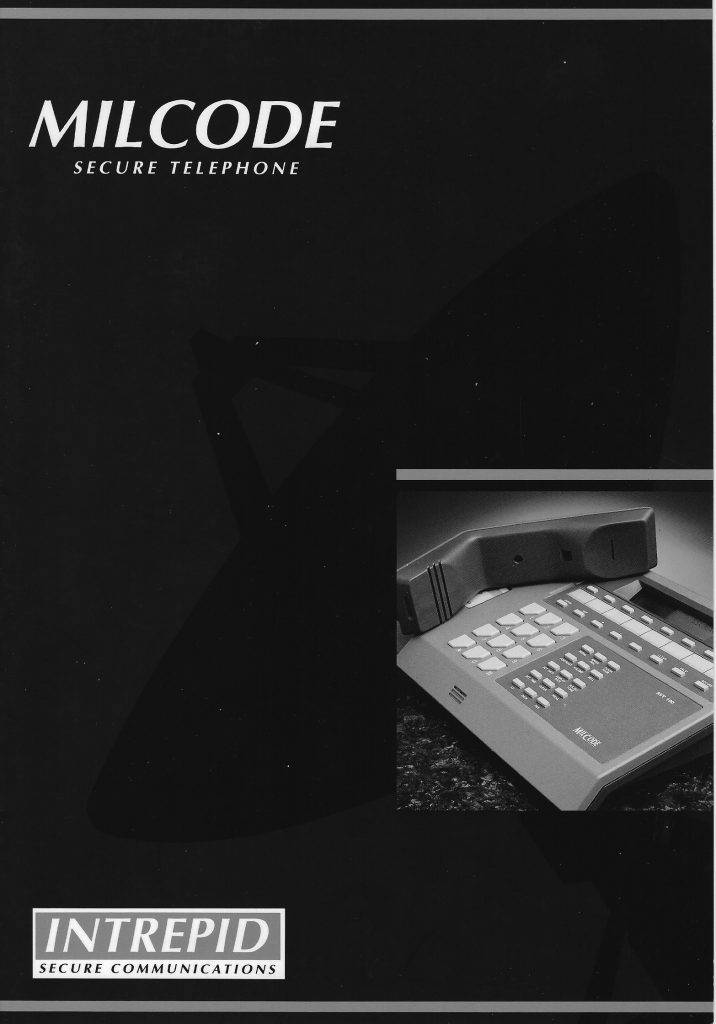
The blend of Neal’s experience of data encryption and speech scrambling led to an invitation from the Irish Department of Defense Directorate of Signals Intelligence in McKee Barracks in 1989.
The US National Security Agency had just released the latest version of the STU3 or STU-III, Secure Telephone Unit Generation 3, widely regarded as the most advanced and expensive secure telephone in the world.
The STU-III had been jointly developed by the NSA, AT&T, RCA, and Motorola, took more than a decade to develop, and at a cost believed to be more than $50 million.
Apart from being very expensive, at up to $6,000 per phone, the phone had numerous quality issues that made in unusable in many environments.
But most important, the phone was widely rumoured to have a back door that would allow the US government to listen into any conversations on the phone. Because the STU-III was used right up to presidential level, fears of a backdoor created significant security and political fears.
The Irish government was also suspicious of a recent offer by the US government to sell them a lower security version of the STU. The concern was that sensitive discussions, over Northern Ireland for example, might not be protected if that phone had a back door.
As a neutral country, Ireland had no restrictions on the development of advanced encryption systems and algorithms. And with Neal’s experience with both voice scrambling and data encryption, the Defense Department hoped that Neal could blend those skills to come up with a better version of the STU-III. A safer, less expensive, less restrictive, and non-compromised European rival.
Neal accepted the challenge, and the project and startup were named Intrepid.
The Baltimore Technologies Connections
Intrepid launched in 1989 and based itself in a small basement office on the east side of Fitzwilliam square. Less than 100 yards away was Ireland’s only other encryption startup, Baltimore Technologies.
In 1990 Baltimore’s founder Michael Purser approached Intrepid to either partner with Neal or license their technology. Intrepid had already developed something much superior but rather than basing it on the most common public key system, RSA, Intrepid had chosen an RSA competitor called the Diffie Hellman public key system.
The co-author of Diffie Hellman, Whitfield Diffie, was a legend in the world of cryptography and widely regarded as the grandfather of modern public key cryptography. Baltimore was also unaware that Whit Diffie was already on his way to Ireland to look at what Intrepid was working on.
There was a growing interest in encryption in Ireland at that time amongst a number of leading entrepreneurs. Intrepid was backed and funded by the Irish government and the IDA, as well as a number of Irish entrepreneurs including Pat McDonagh of CBT and RiverDeep. McDonagh’s business partner Dermot Desmond later acquired Baltimore, who then sold it to Henry Beker, an advisor to Intrepid.
Henry Beker started his encryption career at Racal Comsec in Salisbury, UK, and Racal Comsec later became Intrepid’s first partner and customer. Stephen Farrell, Intrepid’s chief cryptographer, later became Director of Research for Baltimore.
Baltimore achieved a market valuation of $13bn before collapsing in 2000.
The Launch of Milcode
Less than 18 months after that first conversation with the Department of Defense, Neal and his team of nearly 15 announced the arrival of what would eventually be called Milcode.
Milcode quickly won the crown as the world’s “most secure” encrypted telephone, and at the same time solving many of the technical and speech quality issues that had plagued the STU-III for years. In addition to encrypting speech, Milcode could also encrypt data and fax communications. And for as little as $1,500 per phone, it put truly secure communications within reach of a much bigger audience.
Milcode was also the first secure phone in the world to implement a new type of speech synthesis called CELP, or Code Excited Linear Prediction. Until the arrival of CELP all calls on traditional secure phones sounded robotic and identical and gave no clues to identify the caller. A clear security risk.
Delays of 20 seconds just on local calls also meant that many secure phone users simply chose not to use them and instead take a chance with an open line. CELP solved those challenges and Milcode was the first commercial use of CELP in a secure phone.
Neal and his team also developed Faxcode, the world’s first fully encrypting fax machine.
The End of Milcode
A live demonstration of Milcode was given to representatives of Plessey Crypto, a division of GEC Marconi, at the headquarters of the IDA in Wilton Place in mid 1990. At that meeting Plessey confirmed their interest and an estimated sales of at least 50 million pounds worth of Milcodes per year.
The feedback from Plessey was key to unlocking substantial long term funding from the IDA to bring the phone into production, but the IDA suddenly showed little interest and a later demonstration to Racal Comsec helped explain why. Racal had taken one of the phones to its headquarters in Salisbury so they could test the quality and performance of international calls between the UK and Intrepid’s office.
It was later revealed that those encrypted conversations were picked up by a global eavesdropping network known as Echelon, run by a group of five countries and surveillance partners known as the Five Eyes.
The inability of Echelon to crack the Intrepid code alerted the US to the existence of Milcode and triggered a series of events that would result in Intrepid and Milcode being blacklisted globally. It was alleged that if Milcode became widely available, and capable to encrypting voice, data, and fax communications to an unbreakable level, it would pose a major threat to the eavesdropping capabilities of Echelon.
Not long after that, in early 1991, and while still in discussions with Intrepid and still a part owner, the IDA announced funding of £3 million for a US manufacturer of a rival secure telephone to set up a production facility in Blanchardstown. The company was called Cylink, their secure phone was vastly inferior to Milcode, and in spite of public pressure the IDA refused to explain why they chose to fund Cylink over Intrepid. The Cylink factory never opened.
After a short campaign of bomb threats, break-ins, and blacklisting, Intrepid finally folded in 1991. Like a number of other encryption startups, Intrepid became victim of the Crypto Wars and efforts by the US government to stifle any efforts to make unbreakable encryption widely available.
Until the mid 1990s encryption was listed by the US government as a weapon and licensed as such. Any attempt to circumvent strict weapons exporting and licensing laws were quickly dealt with. For example, the same year that Intrepid closed, noted scientist and cryptographer Phil Zimmerman, the creator of the free PGP encryption program, was arrested by the FBI and investigated for five years for trying to make unbreakable encryption available to the public.
Those restrictions were finally lifted in 1996 by an executive order signed by President Bill Clinton.
Neal later moved to London where he worked with GCHQ on the development of a new secure telephone based on the Clipper/Skipjack encryption system. The Clipper chipset had also been developed by the NSA but was later abandoned for a number of reasons including known security weaknesses and concerns over a deliberate backdoor that could allow for warrantless government surveillance.